Papa Bois
The Guardian of the Green
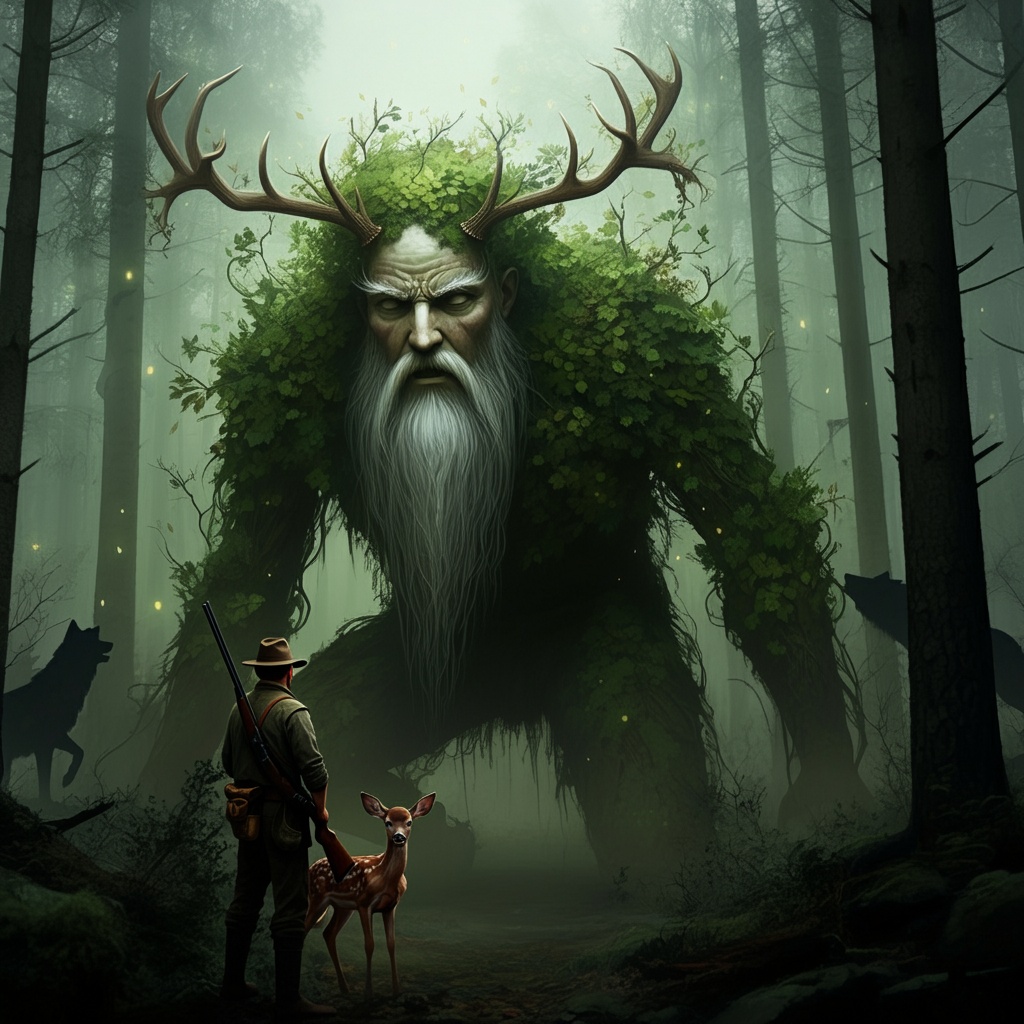
Papa Bois — "Father Wood" — is the ancient guardian of the Caribbean forest. Unlike the other creatures in this bestiary, he is not purely malevolent. He is a protector, a keeper of the wild places, the shepherd of every animal that lives beneath the canopy. But he is not kind to those who threaten his domain.
He appears as an old man, wizened and powerful, with bark-like skin, leaves in his tangled hair, and the legs of a deer or goat. He carries a staff made from a living branch, and he can speak to any animal in its own tongue. The creatures of the forest are his children, and he guards them fiercely.
Hunters who kill more than they need, woodsmen who cut trees without respect, anyone who damages the forest carelessly — these are the enemies of Papa Bois. He will lead them astray, deep into the trackless bush where trails disappear and the canopy blocks all light. Lost hunters have wandered for days, unable to find their way out, hearing his laughter echo from every direction.
But to those who respect the forest — who take only what they need and give thanks — Papa Bois is a silent guardian. They may never see him, but the path home always seems clear, the dangerous creatures always seem to turn away, and the forest provides just enough.
In "Shadows In The Trade Winds," Papa Bois represents the balance between civilization and the wild — and the consequences of taking more than your share.
Origins
French Creole Caribbean, especially Trinidad. "Papa Bois" literally means "Father Wood." Related to European Green Man mythology and West African forest spirit traditions.
Known Traits
- ⟡ Bark-like skin
- ⟡ Deer or goat legs
- ⟡ Speaks to animals
- ⟡ Protects the forest
- ⟡ Can make travelers lost
Protections
- 🛡 Respect the forest — take only what you need
- 🛡 Ask permission before cutting trees
- 🛡 Leave an offering of rum or tobacco at forest edges
- 🛡 If lost, apologize aloud and promise to respect the woods
Appears in: Chapters 6, 11, 15