La Llorona
The Weeping Woman of the Mangroves
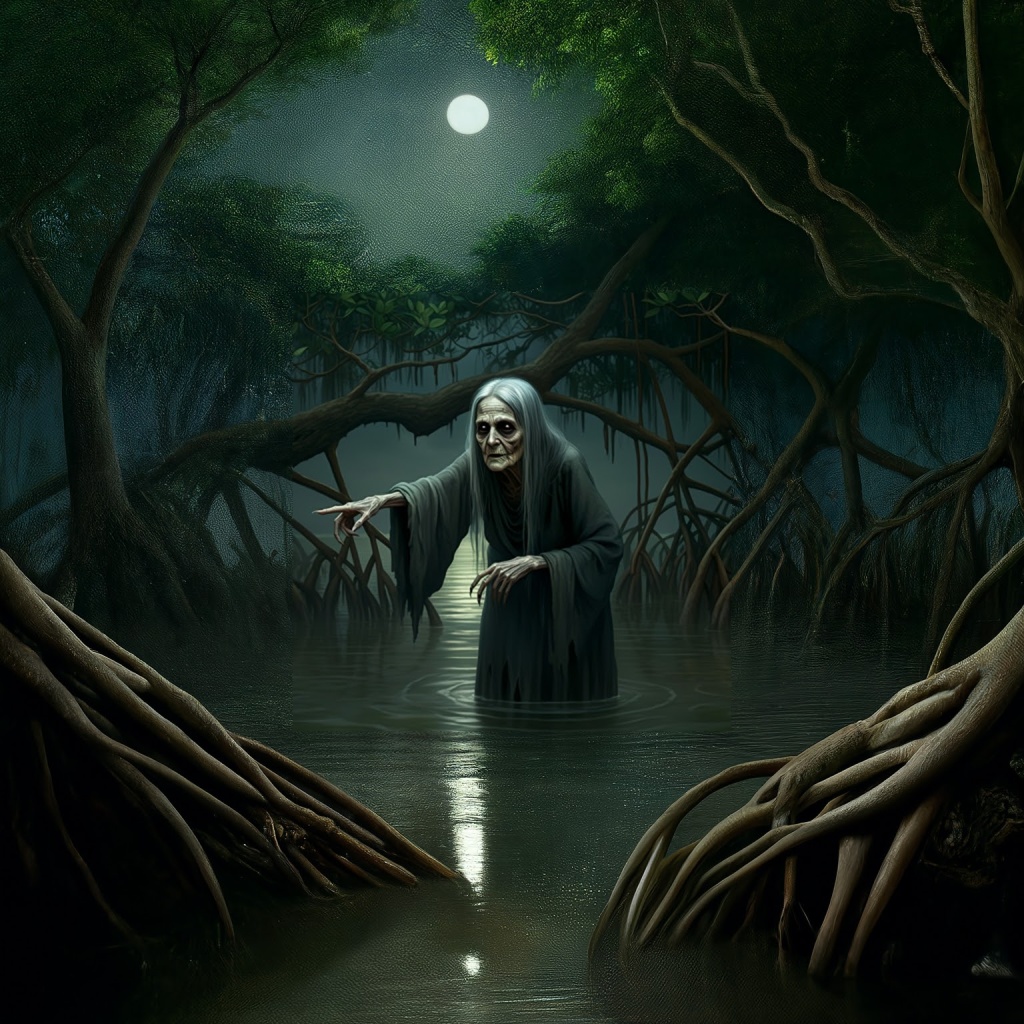
She is heard before she is seen. Somewhere in the mangroves, somewhere over the dark water, the sound of a woman crying — raw, inconsolable grief that cuts through the night air and turns every listener cold.
La Llorona — "the weeping woman" — is one of the most ancient and widespread spirits in the Caribbean and Latin America. The core story is always the same, though the details shift from island to island: a woman, beautiful and proud, drowned her children in a river or swamp, either for a man who didn't love her, or in a fit of madness, or as a sacrifice she later could not bear. When she died, she was condemned to roam the waterways forever, weeping for what she had done, searching for the children she destroyed.
But grief has a way of turning outward. La Llorona is drawn to children. She mistakes them — or pretends to mistake them — for the ones she lost. She calls out to children near water's edge, her voice mimicking a mother's love. Children who approach do not return.
In the Caribbean version, she haunts the mangrove swamps specifically — those liminal places where the land meets the sea, where roots rise out of dark water and the air smells of salt and decay. The mangrove is her domain. Her weeping echoes differently there, bouncing off the tangled roots, impossible to locate, impossible to escape.
In "Shadows In The Trade Winds," La Llorona embodies maternal guilt and the way unprocessed grief warps into something that destroys the living.
Origins
Ancient origins in Aztec mythology (Cihuacoatl), spreading through Spanish colonization across the Caribbean and Latin America. The Caribbean version has specific mangrove associations that distinguish it from the Mexican and Central American variants.
Known Traits
- ⟡ Weeps continuously
- ⟡ Haunts mangroves and waterways
- ⟡ Targets children
- ⟡ Voice echoes without direction
- ⟡ Most active at night
Protections
- 🛡 Keep children away from water's edge at night
- 🛡 Never respond to crying from the mangroves
- 🛡 Carry a rosary or blessed object near water
- 🛡 Speak your children's names aloud — La Llorona cannot call a named child
Appears in: Chapters 6, 13